
BY: Alexa Fronczek-Lewis
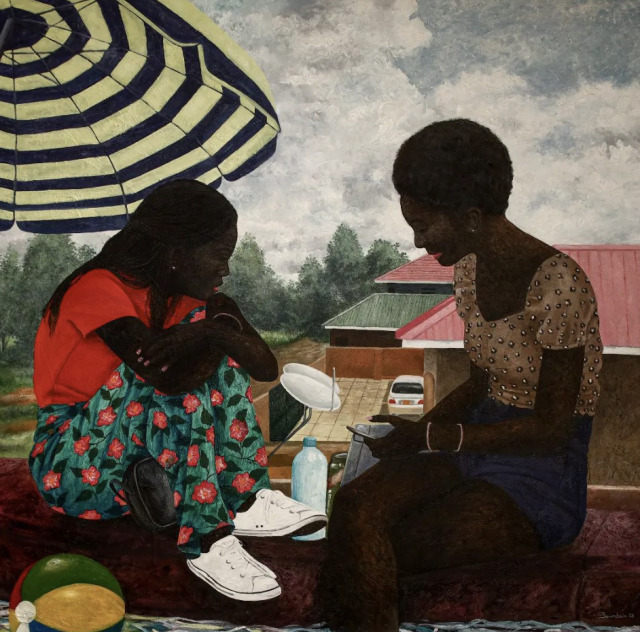
A fulfilling life necessitates good health, which relies on access to quality healthcare. In the United States, this access is elusive for many. The African-American community, specifically Black women, has endured countless instances of medical professionals lacking care for the women, their families, and their children, revealing a gruesome history within the medical sphere.
The reasoning behind this disturbing history can be explained by the social and political frameworks that have resulted from slavery. As White America moved forward in time, the situation surrounding Black women’s status within the medical sphere did not improve by much. Ula Taylor positions the bodies of African-American women as perfect targets for declining health due to the continual justification of the mistreatment of black women in history (Taylor, 20). Many Black women turned to their own knowledge of curing illnesses with home materials and food to lessen interactions with the healthcare system. Since the 1970s, Black women have created, adopted, and passed on remedies aimed at curing illness to protect their families.
Just as computer hacks are innovative and unconventional ways of solving problems, the home remedies created by Black women can also be regarded as hacks. Black women developed these “health hacks” using household items and community knowledge to address health issues in the context of a broken healthcare system. Remedies are not simply cultural traditions, but adaptive methods of problem-solving. Acknowledging health hacks as inventive solutions allows Black women to be placed within broader genealogies of hackers so their resilience and intelligence are recognized.
Although these hacks are often created by one family’s mother, the knowledge surrounding the hack’s replication or improvement is communal. The communal aspect of these remedies mimicked traditional circles of sharing and continued due to their encouragement of self-help and political rights in the wake of the growing feminist movement.
Byllye Avery, the founder of the National Black Women’s Health Project, actualized the creation of community-based self-help programs from traditions of African-American women sharing healing herbs (Taylor, 23). Not only did women come together to share experiences, but they also circulated knowledge of these homemade remedies, or “health hacks.” In these groups and beyond, health care was a tool for community development that began to be embraced by African-American women within feminist movements. Community and remedies became extremely important within African-American culture, as self-help and empowerment were heavily emphasized in the 70s and 80s (Nelson, 101).
These communal spaces for Black women can be compared to the hacker conference explored by Gabriella Coleman in Coding Freedom. Coleman explains that conferences create a feeling of unity, but are also spaces meant for commentary and reflection on social life (Coleman, 49). Similarly, Black women come together to listen to each other’s life stories, while also learning and building off each other’s remedies. Health hacks become simultaneously widespread and bettered, just like the hacker’s projects. An emphasis on self-help mimics the value placed on independent creation within hackerspaces. Women feel pride and recognition when they present their health hacks to their community. Just as code offers independence for hackers, health hacks give Black mothers a sense of autonomy when caring for their families.
Modern food blogs are often filled with recipes and cultural anecdotes, and the same can be said for health hacks as they include both cultural ideas and foods (Quandt). For example, a common hack for healing a sore throat is a drink made from lemon, salt, honey, and vinegar. As Meneses notices in Tastes, Aromas, and Knowledges, “At the hands of these women, I began to understand how products are transformed into culture” (Meneses, 161). This can be seen on the Mom’s Favorite Natural Remedies page within the Black Doctor website as it outlines various home remedies and their cultural significance (Jones).
Meneses’ observations about the connections between food making by women and knowledge can also be applied to the African-American community’s health hacks. There is a deep connection between motherhood and the creation of health hacks, as well as how they are perceived in terms of power. Meneses speaks to this by explaining that “close links between existence, knowledge, and power” can be seen within “many women who are responsible for the survival of their families and community” despite continually being “transformed into…bodies without knowledge (Meneses, 162).
Along with knowledge, health hacks also carry a cultural weight. Stemming from oppression, these hacks are evidence of a defense against social conditions as they are “embedded in…religious life, art, social activism, and…relationships” (Mitchum). Due to the intertwining relationships that bind the use of hacks together, knowledge of hacks creates solidarity (Chireau). Health hacks have not only created a positive impact on the lives of Black women in terms of independence, autonomy, and creativity, but have also proliferated into the larger Black community as a way to establish mutual understanding.
References:
Chireau, Yvonne. Church History, vol. 77, no. 2, 2008, pp. 535–37. JSTOR, http://www.jstor.org/stable/20618536. Accessed 11 Dec. 2023.
Coleman, E. Gabriella. 2013. Coding Freedom: The Ethics and Aesthetics of Hacking. Princeton: Princeton University Press
“Inside African-American Folk Healing.” NPR, NPR, 1 Aug. 2007, http://www.npr.org/templates/story/story.php?storyId=12424129.
Jones, Lorraine. “Mom’s Favorite Natural Remedies.” Black Doctor, blackdoctor.org/moms-favorite-natural-remedies/. Accessed 21 Nov. 2023.
Meneses, Maria Paula. “Tastes, Aromas, and Knowledges: Challenges to a Dominant Epistemology.” In Knowledges Born in the Struggle, pp. 162-180.
Nelson, Jennifer. “‘Hold Your Head up and Stick out Your Chin’: Community Health and Women’s Health in Mound Bayou, Mississippi.” NWSA Journal, vol. 17, no. 1, 2005, pp. 99–118. JSTOR, http://www.jstor.org/stable/4317104. Accessed 21 Nov. 2023.
Taylor, Ula Y. “MAKING WAVES: THE THEORY AND PRACTICE OF BLACK FEMINISM.” The Black Scholar, vol. 28, no. 2, 1998, pp. 18–28. JSTOR, http://www.jstor.org/stable/41069774. Accessed 21 Nov. 2023.
Quandt, Sara A et al. “Home Remedy Use Among African American and White Older Adults.” Journal of the National Medical Association vol. 107,2 (2015): 121-9. doi:10.1016/S0027-9684(15)30036-5
Staff, Written by NewsOne. “Humor: Top 10 Black Home Remedies.” NewsOne, 19 June 2019, newsone.com/290397/humor-top-10-black-home-remedies/#:~:text=%3A%29%201%201.%20Drinking%20a%20combination%20of%20lime%2C,juice%20to%20knock%20out%20a%20cold%20More%20items.
Art Credit
“The girl talk” Oil on canvas 150cm X 150cm 2023 . . . . . . #contempraryart #contemporaryartcollectors #arshare #portraitoftheday… | Instagram
 Hacking from the South